Front-sided Sound Field Modulation (FSFM)
Unlike conventional headphones, the sound of grells OAE series is shaped by the individual anatomy of the ear. This is thanks to grells innovative Front-sided Sound Field Modulation (FSFM) technology. Developed by grell based on decades of experience, this technology makes the finest nuances in the mid and high frequencies audible in a natural and detailed clarity.
How it works
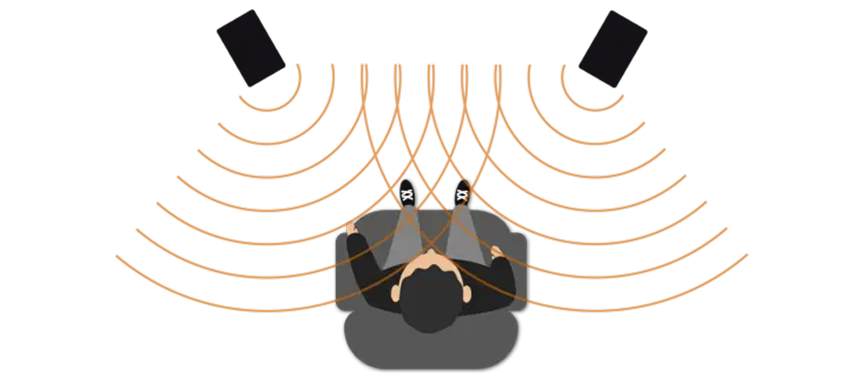
At a concert, in conversation, or at home with a stereo speaker system, we hear sound coming from the front. When sound comes from the side, we instinctively turn our head so that we can hear the sound coming from the front again. This corresponds to our hearing behavior and allows us to perceive sound accurately and without distortion.

In conventional headphones, the transducers are positioned so that the sound comes directly from the left and right. This creates a sound field next to the ear. The result: the sound reaches the ear distorted.
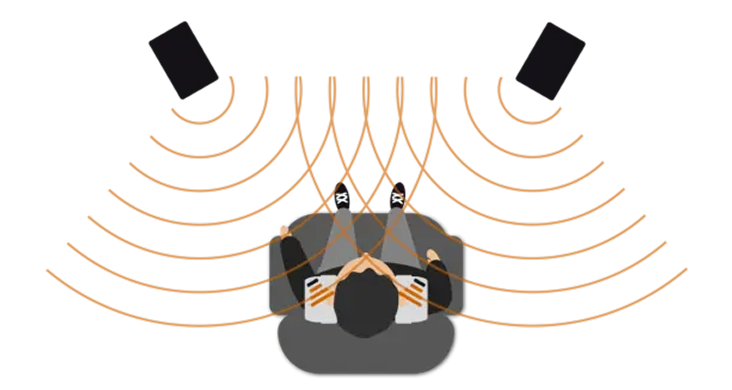
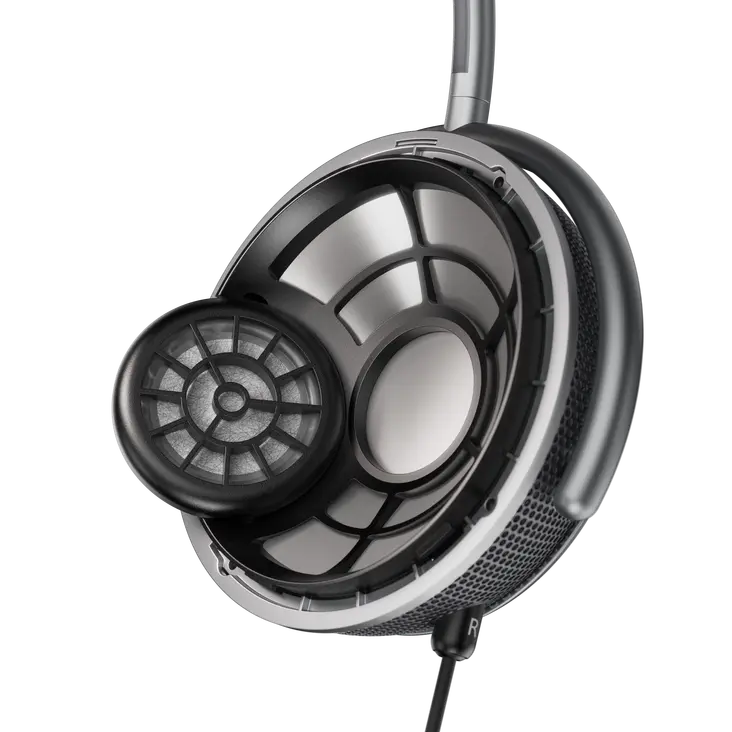
Front-sided Sound Field Modulation (FSFM) positions the transducers in the headphones at an angle in front of the ear. It projects the sound waves as if they were coming from a source in front of us.

Our ears are designed to process sound optimally from the front. When listening with Front-sided Sound Field Modulation (FSFM), the individual geometry of our ears is utilized to shape the frequency response arriving at the eardrum. This allows us to perceive sound as undistorted as possible.
The damping concept
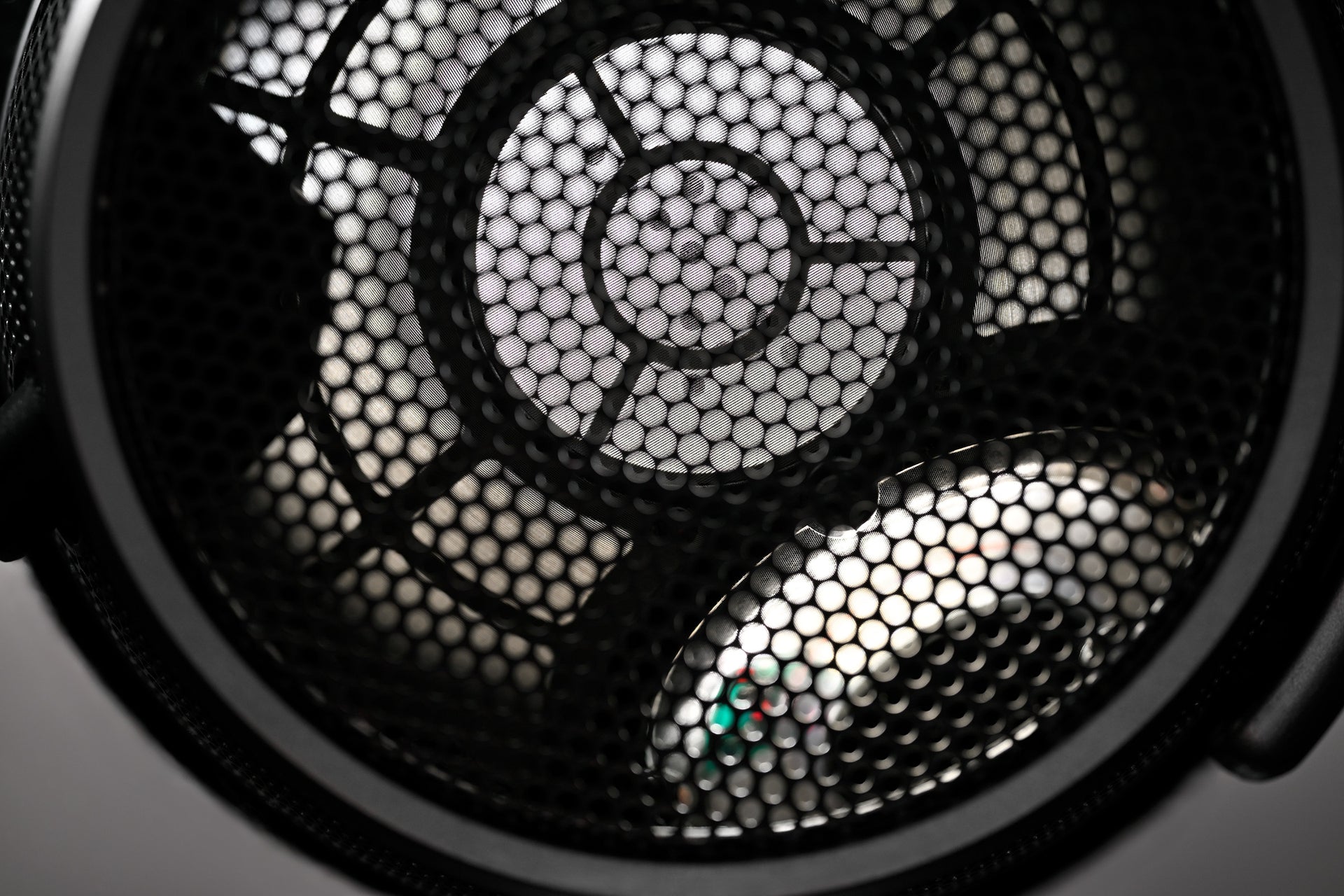
During the development of the OAE2, a broad range of acoustic materials was thoroughly examined, leading to an innovative damping approach that delivers remarkably deep and controlled low-frequency performance. The headphones combine highly precise engineering with premium components, including advanced damping compounds, specialized plastics, zinc, and stainless steel. A finely structured, acoustically transparent stainless-steel mesh is seamlessly integrated into a lightweight yet durable plastic dome. Together with the uniquely shaped baffle, these carefully selected materials create the exceptional sense of openness that defines the OAE2, a design that is currently patent pending.
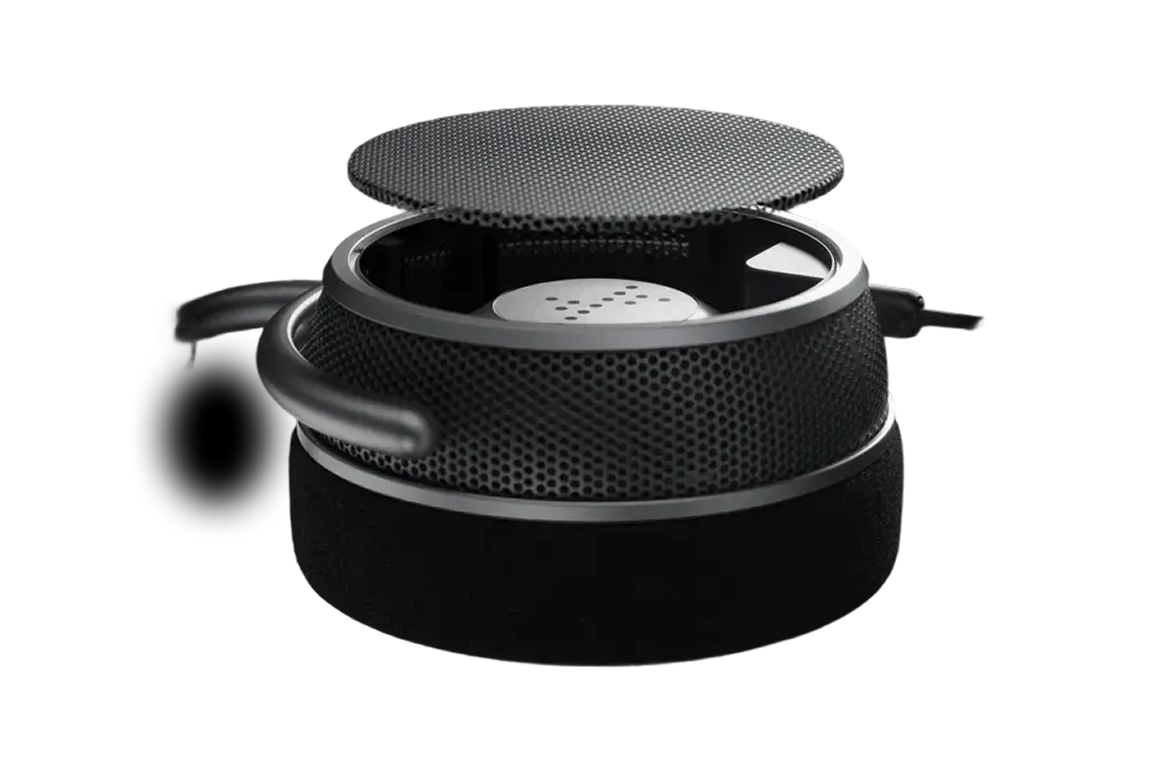
Open stainless steel mesh for a natural, transparent sound
The baffle
The transducer and baffle form the technological heart of the OAE2.
Unlike conventional headphones, the OAE2 from grell is equipped with an angled transducer that sits at an angle to the baffle – the acoustic heart of the headphones. The dome of the 40 mm transducer is made of bio-cellulose. It enables a large radiating surface of the transducer combined with with high excursion. The result is an optimal balance between finely resolved highs and powerful bass. The curved open area of the OAE2's baffle is twice as large as that of comparable headphones. This design allows the sound to spread naturally without being reflected by large, acoustically closed areas. Covered with a precision-manufactured stainless steel mesh made in Germany, the baffle defines the acoustic impedance. It creates a balance between low and high frequencies and controls bass reproduction. This prevents sound coloration and uncontrolled resonances.